Optical Illusion
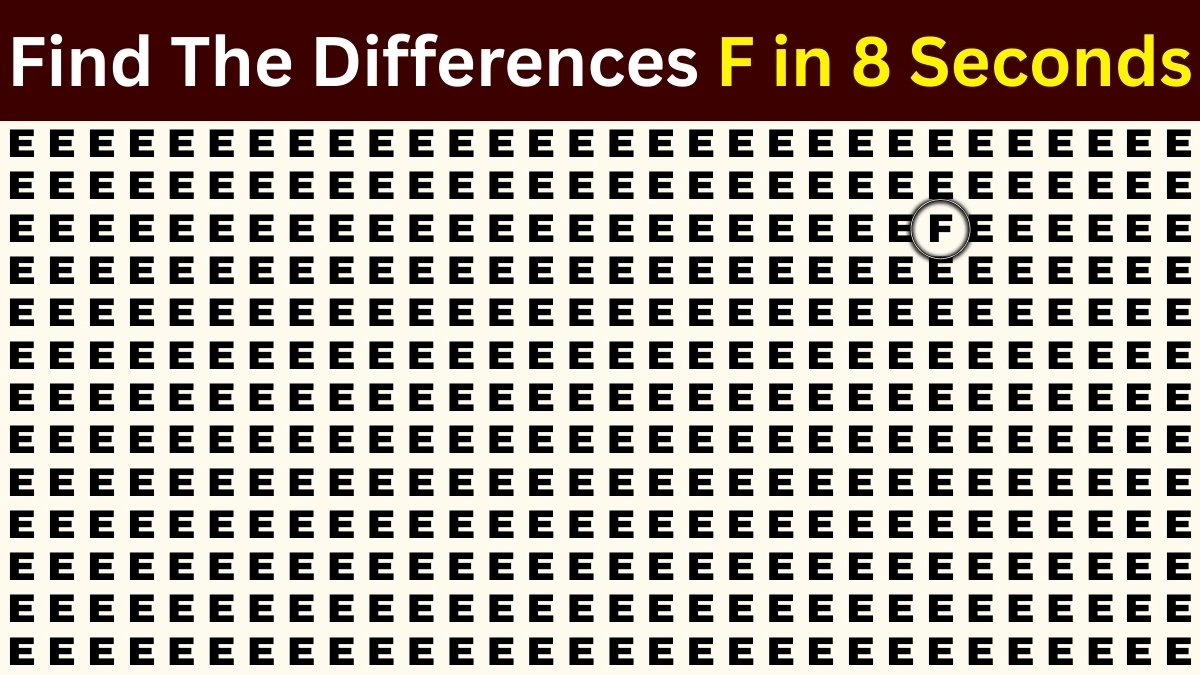
At first glance, this brain teaser looks simple but don’t be fooled. Hidden somewhere in this visual puzzle is the letter F, and your challenge is to spot it within just 8 seconds.
Designed to test your focus, speed, and attention to detail, this quick challenge pushes your brain to process patterns under pressure. Ready to see how sharp your observation skills really are?
Brain Teaser: Challenge Yourself to Find the Letter F in 8 Seconds
This brain teaser works by challenging how your brain naturally processes familiar patterns. When you look at a group of similar letters or shapes, your mind tends to scan quickly and assume everything is the same.
This shortcut helps in everyday life, but in puzzles like this, it becomes a trap. The hidden letter F blends in because its structure closely resembles other letters around it, causing your eyes to skip over small differences.
Time pressure makes the challenge harder, as your brain switches to fast scanning instead of careful inspection. Visual distractions, repeated shapes, and uniform spacing all contribute to the difficulty.
To solve it, slowing your gaze and focusing on each letter individually can make a big difference. Brain teasers like this sharpen concentration, improve visual discrimination, and train the mind to notice details it usually ignores.
With regular practice, your ability to spot subtle differences under pressure improves noticeably.
Brain Teaser: Challenge Yourself to Find the Letter F in 8 Seconds - Solutiion
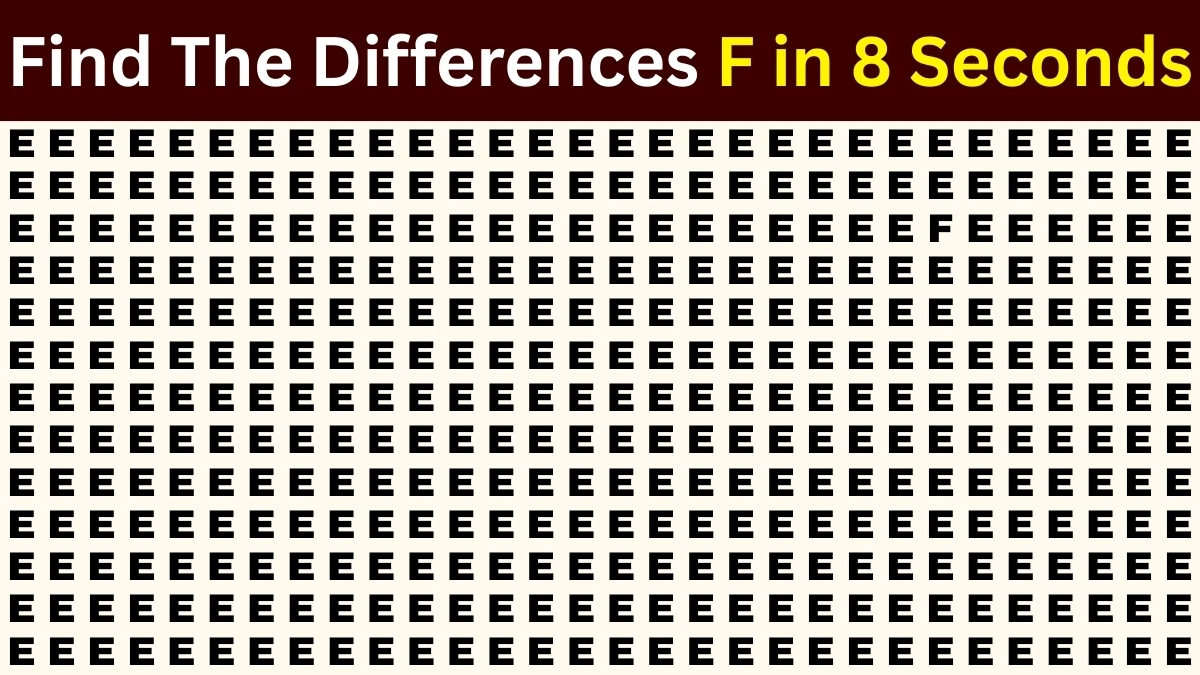
If you couldn’t spot the hidden letter F within the time limit, don’t worry this puzzle is intentionally designed to trick your eyes. The letter F is located in the third row from the top and the seventh column from the right side of the image.
At first glance, all the characters look identical because the letter F closely resembles the surrounding E letters. The key difference is subtle: the letter F is missing the bottom horizontal stroke that an E normally has.
When your brain scans quickly, it tends to group similar shapes together and overlook small variations. That’s why slowing down and checking each row carefully often helps.
Starting from the top row and counting across from the right side makes the location easier to identify. Puzzles like this train your brain to improve visual focus, attention to detail, and patience skills that get better with practice.