Optical Illusion
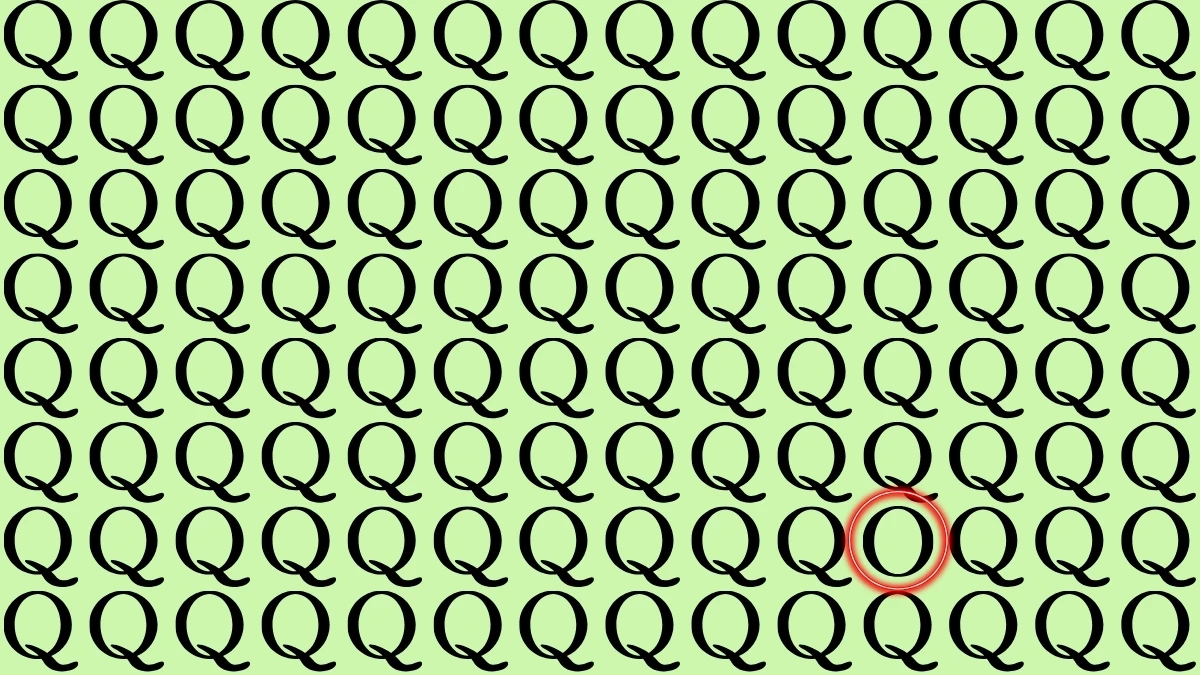
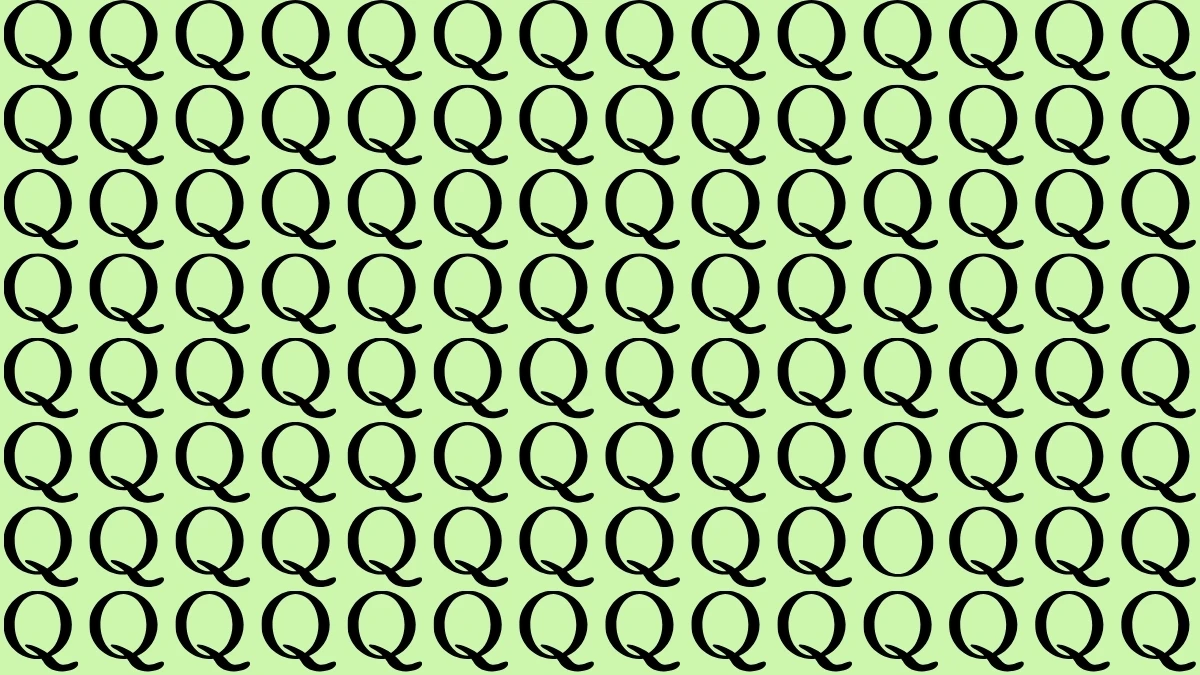
At first glance, this brain teaser looks simple but a closer look tells a different story. Hidden somewhere in this image is the letter O, cleverly blended to test your focus.
You have just 7 seconds to spot it. Ready to see how sharp your observation skills really are?
Brain Teaser: Challenge Yourself to Find the Letter O in 7 Seconds
This brain teaser works by taking advantage of how the human brain processes familiar patterns. When we see rows of similar letters or shapes, our mind tends to group them together instead of examining each one individually.
In this puzzle, the letter O is placed among characters that look almost identical at a quick glance, which causes the eyes to skim rather than inspect carefully.
Another reason this challenge feels tricky is time pressure. With only 7 seconds, the brain switches to fast scanning mode, increasing the chances of overlooking small differences.Our attention is naturally drawn to repetition, not subtle variation.
To solve puzzles like this more easily, it helps to slow down slightly and scan the image row by row, focusing on the inner shape of each character.
Instead of looking at the whole image, train your eyes to notice curves, gaps, or thickness differences.These small details are often the key to spotting the hidden letter quickly.
Brain Teaser: Challenge Yourself to Find the Letter O in 7 Seconds - Solution
The hidden letter O can be found by looking carefully at the lower part of the image.Start from the bottom row of letters and move one row upward, which brings you to the second row from the bottom.
From there, begin counting letters from the right-hand side. When you reach the fourth column from the right, you’ll spot the only O in the grid.
What makes this puzzle tricky is that almost every character is a Q, and the brain tends to register them as identical shapes. The key difference is subtle: a Q has a small tail or stroke, usually at the lower-right edge, while an O is perfectly round with no tail at all.
Under time pressure, the brain skips these tiny details. Focusing on the absence of the tail rather than the letter itself makes the solution much easier to see and confirms the correct spot quickly.