The Challenge
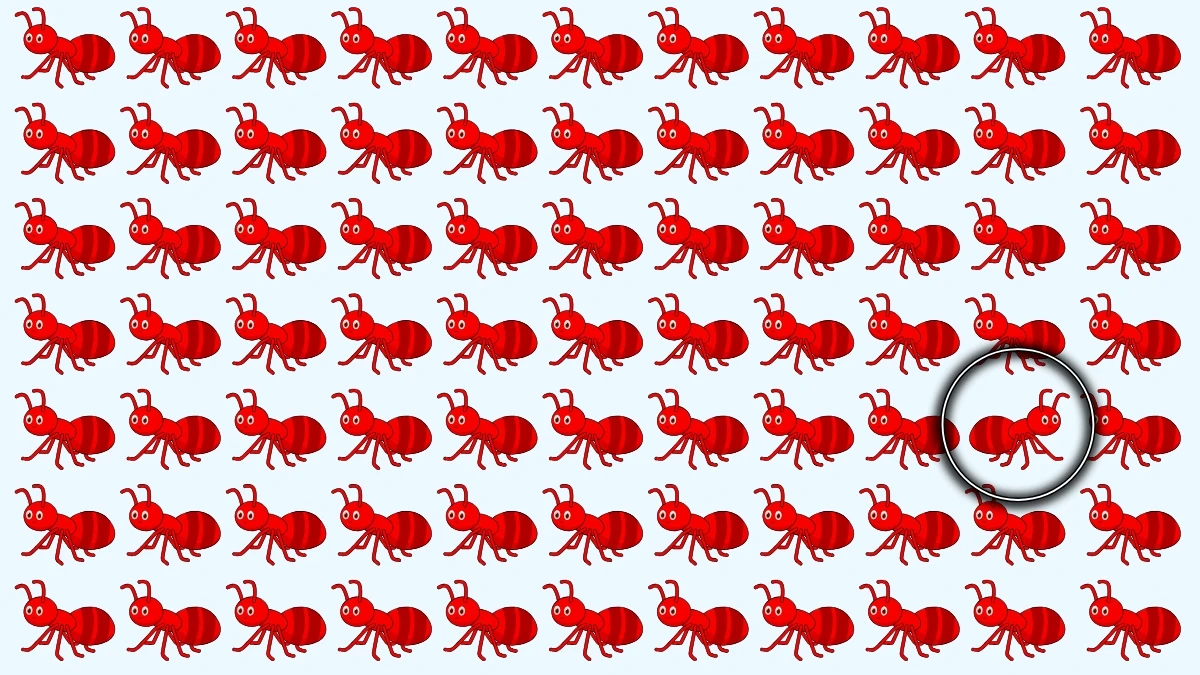
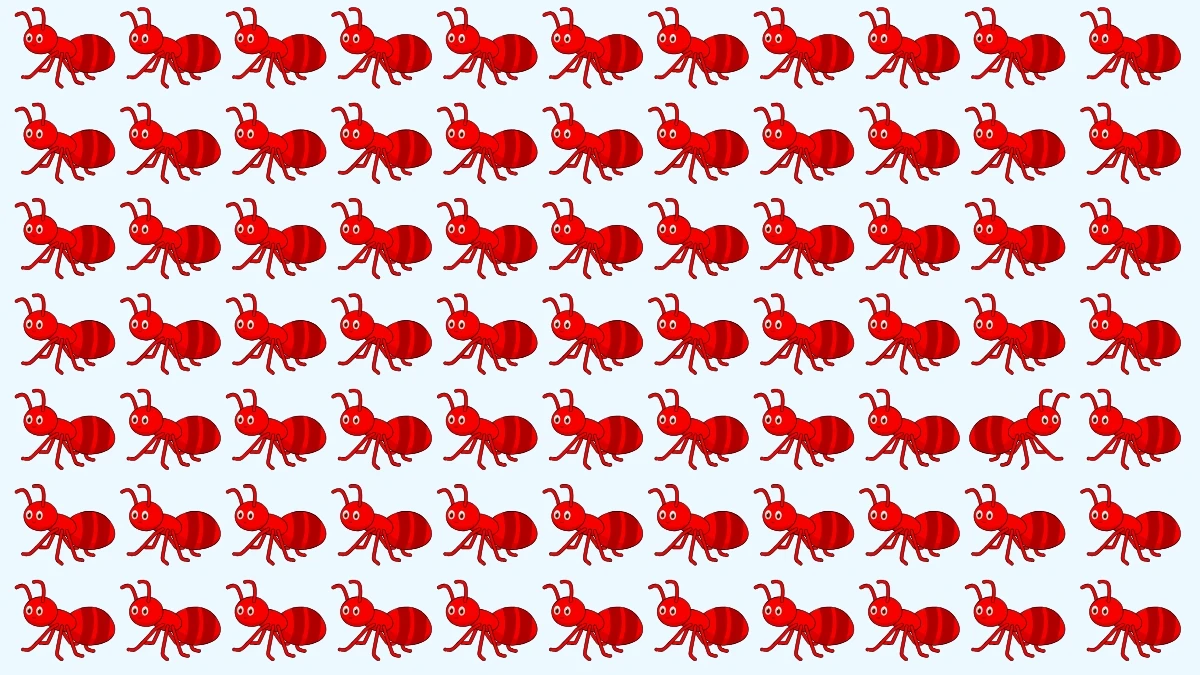
Look closely at the image filled with bright red cartoon ants arranged in rows against a light background.
Each ant has the same big eyes, curved antennae, and rounded body segments, which makes the whole scene blend into one repeating pattern.
Hidden among them is a single “odd one” that breaks the pattern with a small but important difference.
Your task is simple to explain but tricky to solve: spot the one ant that does not match the rest in just 5 seconds. Set a timer, take a deep breath, and put your observation skills to the test as you scan each row without blinking.
This is a genuine IQ test style puzzle challenge, and time is ticking from the moment your eyes hit the image, so do not delay once you start.
Benefits of Solving Puzzles
Regularly solving optical illusion puzzles like this can give your brain a quick mental workout, similar to a quick gym session for your mind.
These games engage both sides of the brain at once, forcing you to combine logic with creative visual thinking as you search for the one detail that breaks the pattern.
Experts often point out that visual brain teasers enhance neural pathways related to attention and pattern recognition, which helps sharpen visual processing speed in everyday life.
Over time, this kind of practice can boost cognitive skills such as concentration, working memory, and problem‑solving, which are useful for studying, driving, or even spotting errors at work.
Many people also use these viral optical illusion challenges as a fun way to de‑stress, since focusing on small details pulls attention away from daily worries for a few minutes.
Why This Puzzle Is Hard
At first look, this ant puzzle feels easy because every ant seems exactly the same, and the bright color tricks the brain into seeing one big block of red rather than individual characters.
The repeated shapes create visual fatigue, so your eyes quickly slide over rows without truly inspecting each ant, which is why most people give up after just a few seconds.
The odd ant is not wildly different; the change is subtle, like a small shift in leg position or body segment shape, and that tiny mismatch makes the puzzle genius‑level for many players.
Puzzles that use small differences in nearly identical objects often stump more than 95% of viewers on their first attempt, which is why challenges like “only 1% can spot it in time” are trending across news and lifestyle sites.
Hint
Still searching? Do not worry most people need an extra nudge before their eyes lock onto the right spot.
First hint: focus your attention on the lower part of the image instead of scanning the entire grid at once, because the odd ant is not near the top rows.
If that does not help, try narrowing your view to the right‑hand side of the lower rows and look for an ant whose body posture feels a bit different compared to its neighbors.
Final hint before the solution: pay close attention to the legs one ant’s legs are arranged in a slightly unusual way that makes its stance stand out once you notice it.
Solution
If you managed to find the odd ant in under 5 seconds, congratulations! That puts you in a tiny group of players with lightning‑fast visual perception and top‑tier observation skills.
Speed like that suggests your brain is excellent at spotting irregularities in busy scenes, a skill that often appears in people who regularly train with puzzles, pattern games, and other optical illusions.
For everyone still wondering where the odd one is hiding, look at the bottom‑right area of the image.
The unique ant is located in the second row from the bottom and a few positions in from the right edge; its legs are arranged in a different pose compared to the uniform marching stance of the others, which breaks the pattern when you see it.
Once this is pointed out, the difference feels obvious, but your brain was previously auto‑correcting the shape to match the rest of the group, which is exactly how optical illusion puzzles fool even very smart people.